
Hello world!
September 30, 2025# The Silent Revolution: What Really Happens When You Press the Pedal in an Electric Car
Ever wonder why electric cars feel like they’re powered by magic? You step on the pedal and ZOOM – you’re flying forward without any engine noise, gear changes, or drama. Just smooth, instant power that makes you feel like you’re driving in the future.
My neighbor got an electric car last year, and the first thing he said was, “It’s like driving a golf cart that ate a rocket.” Pretty accurate description! But what’s actually happening under that hood (which might just be extra storage space now)?
Let’s dive into the surprisingly simple world of electric car technology. Spoiler alert: it’s way less complicated than the gas-powered machines we’ve been driving for over a century.
## The Heart of the Matter: Electric Motors vs. Gas Engines
### Why Electric Motors Beat Traditional Engines at Their Own Game
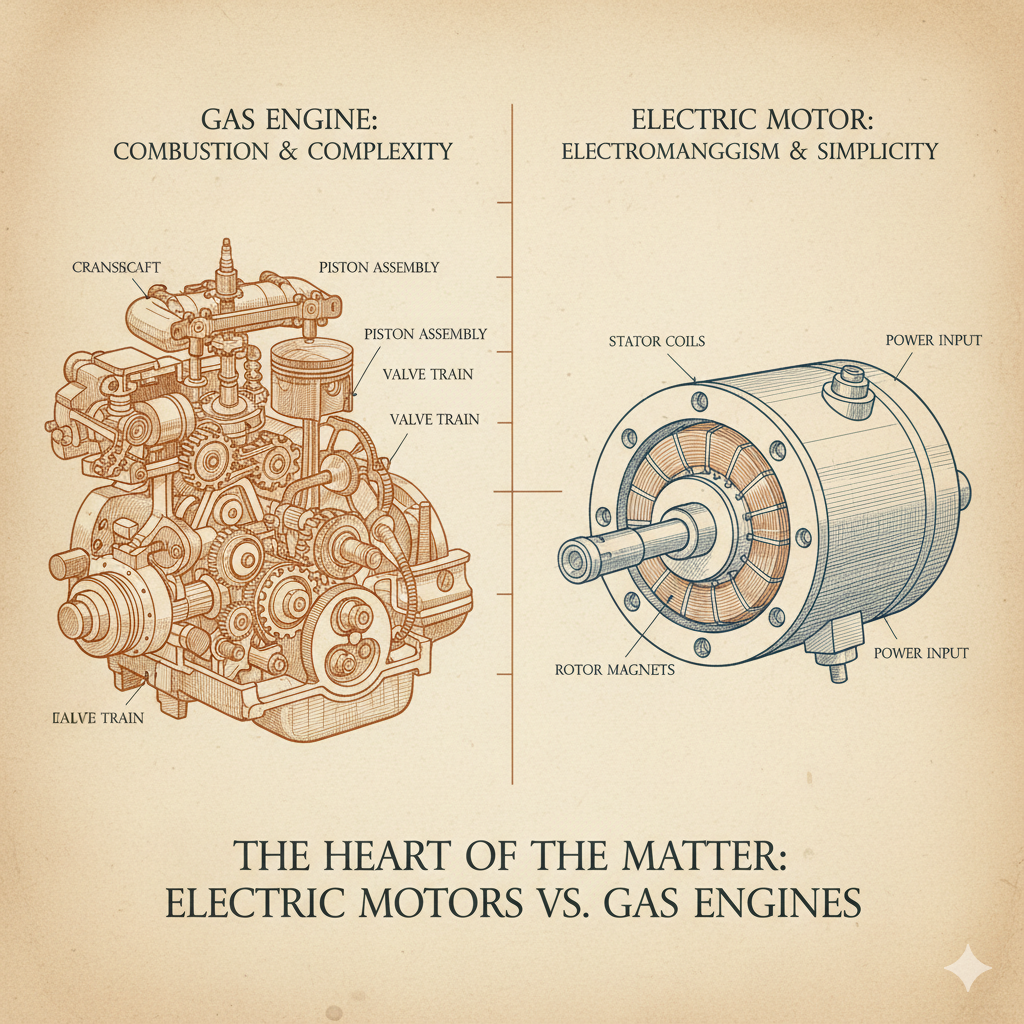
Get ready for this mind-blowing fact: your typical gas engine has over 2,000 moving parts. An electric motor has roughly 20. That’s not a typo – twenty!
Picture your gas car’s engine for a moment. It’s got pistons dancing up and down, a crankshaft spinning like crazy, valves popping open and shut, belts keeping everything timed perfectly, and a transmission full of gears doing their own complicated dance. It’s like watching a thousand-piece orchestra where every musician has to hit their note at exactly the right moment.
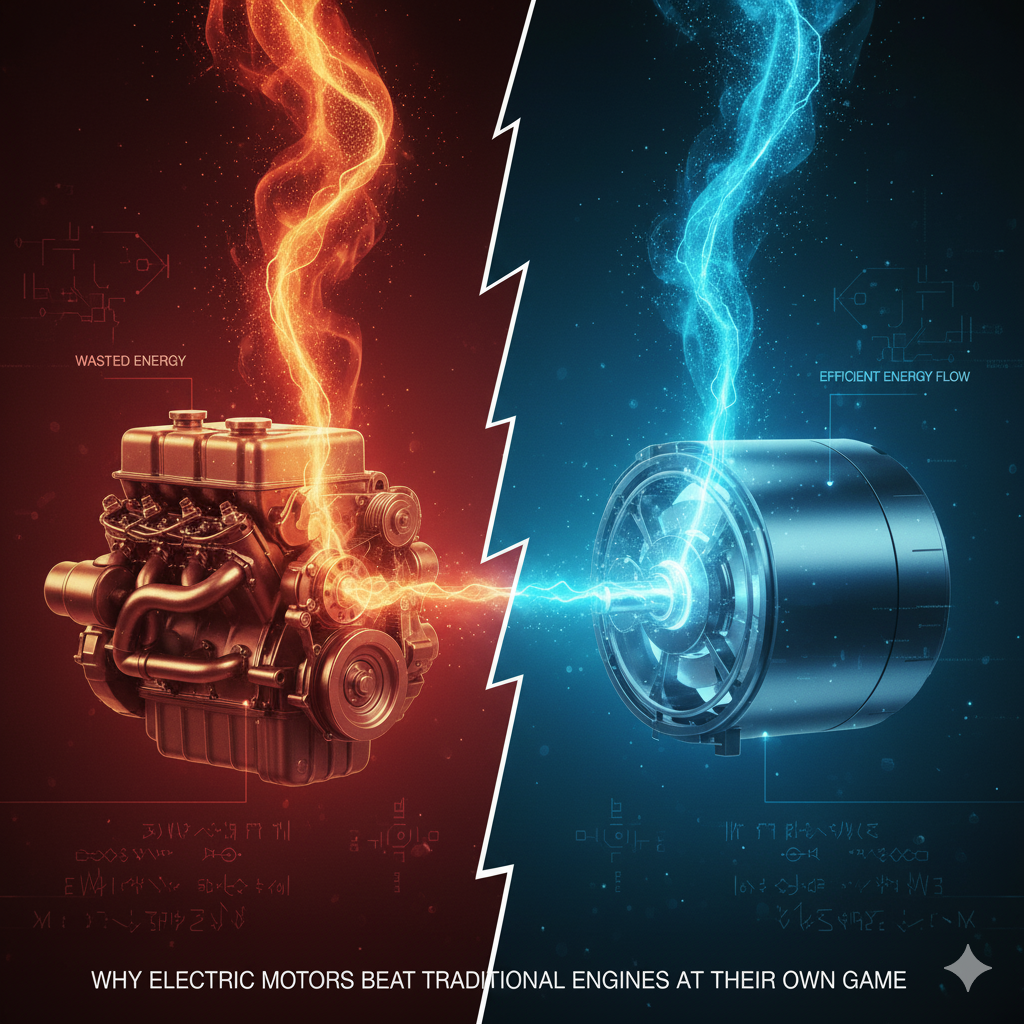
An electric motor is more like a single guitar player – simple, direct, and surprisingly powerful. While gas engines waste about 70% of their energy as heat (ever notice how hot car hoods get?), electric motors convert almost all their electricity straight into motion.
Plus, electric motors have been around since the 1800s. We’ve been using them in fans, trains, and washing machines forever. The only new part is making them strong enough and batteries good enough to power your daily drive.
### The Basic Physics: How Electricity Creates Motion
Don’t panic – I won’t make this feel like physics class. The secret behind electric motors is something you played with as a kid: magnets!
Remember how magnets stick together when opposite poles meet, but push apart when you try to force the same poles together? Electric motors use this exact principle, just in a really clever way.
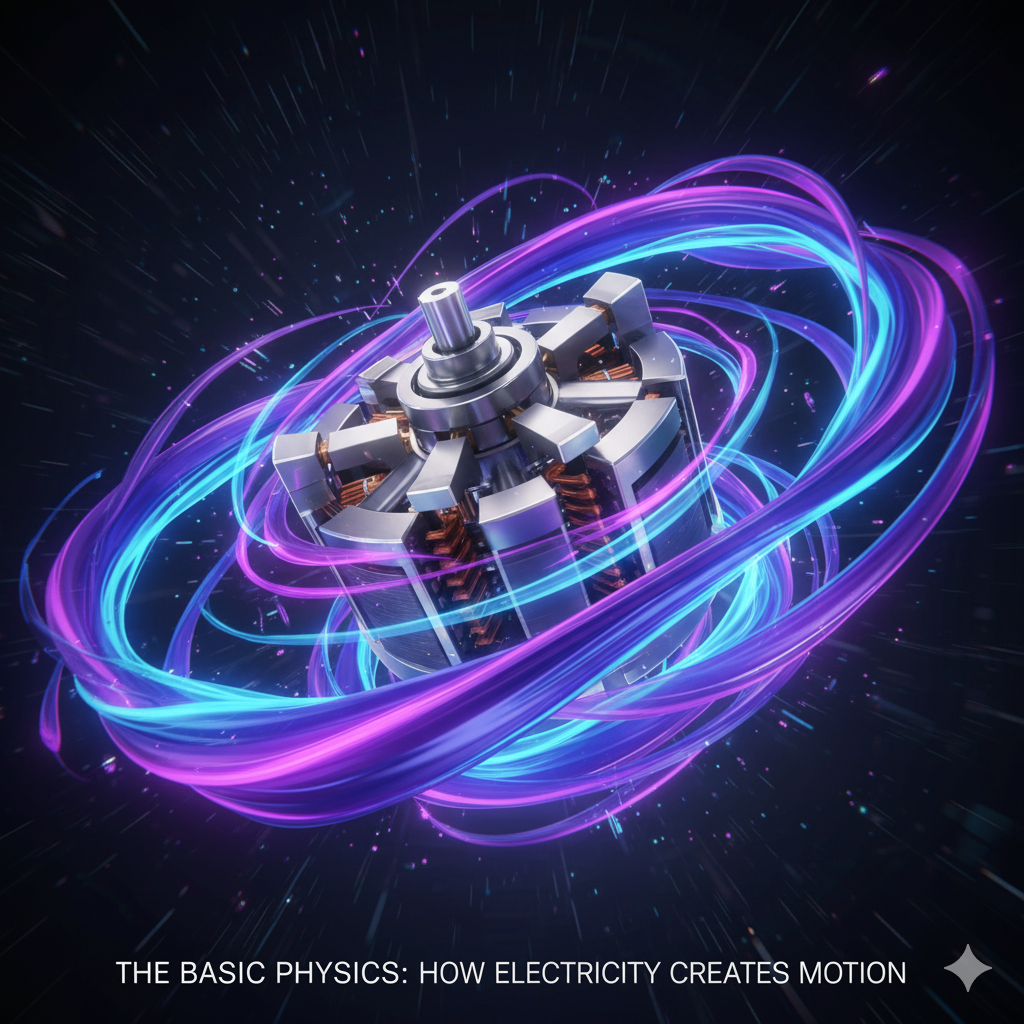
Inside the motor, there’s a circle of electromagnets (magnets you can turn on and off with electricity) around the outside, with a spinning part called a rotor in the middle. By turning different electromagnets on and off in the right order, the rotor gets pushed and pulled around in a circle.
It’s like having someone constantly wave your favorite snack in front of you, except you’re a magnet and the snack is another magnet, and they’re both spinning around together.
### Instant Power: Why Electric Cars Feel So Quick Off the Line
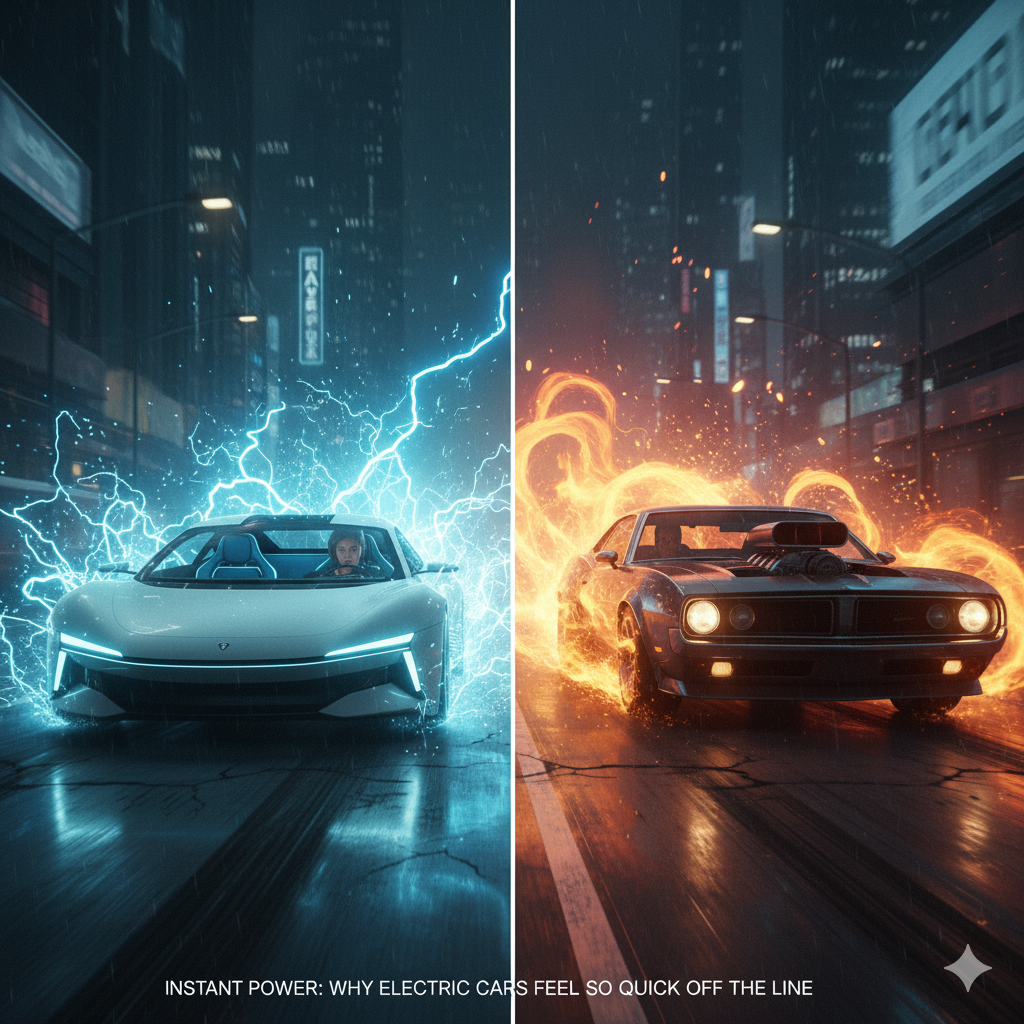
Here’s where electric cars get really fun. Gas engines are picky about when they make their best power – usually somewhere in the middle of their speed range. Too slow and they’re sluggish. Too fast and they run out of breath.
Electric motors deliver maximum twisting power right from the start. Zero RPM? Full power available. It’s like the difference between a bicycle where you need to pedal really fast to get moving versus an electric scooter that zooms away the second you hit the button.
This is why even basic electric cars can feel quicker than fancy sports cars around town. While the sports car is busy figuring out gears, the electric car is already halfway down the block.
## The Power Source: Batteries That Actually Make Sense
### Lithium-Ion Technology: What’s Really Inside Your EV Battery
Forget that heavy black box under your gas car’s hood that dies every winter. EV batteries are completely different – imagine thousands of smartphone batteries all working together as a team.
Each battery cell has lithium ions (think of them as tiny energy carriers) that shuttle back and forth between two different materials. When you’re charging, they move one direction. When you’re driving, they move the other direction. This back-and-forth creates the electricity that powers your car.
The smart part is how these cells are organized. Instead of one giant battery that could ruin your whole day if it breaks, EVs use hundreds of smaller cells in groups. If one goes bad, the others keep working. Plus, they’re arranged in the car’s floor, which gives you better balance and more room inside.
### How Battery Packs Store and Release Energy on Demand
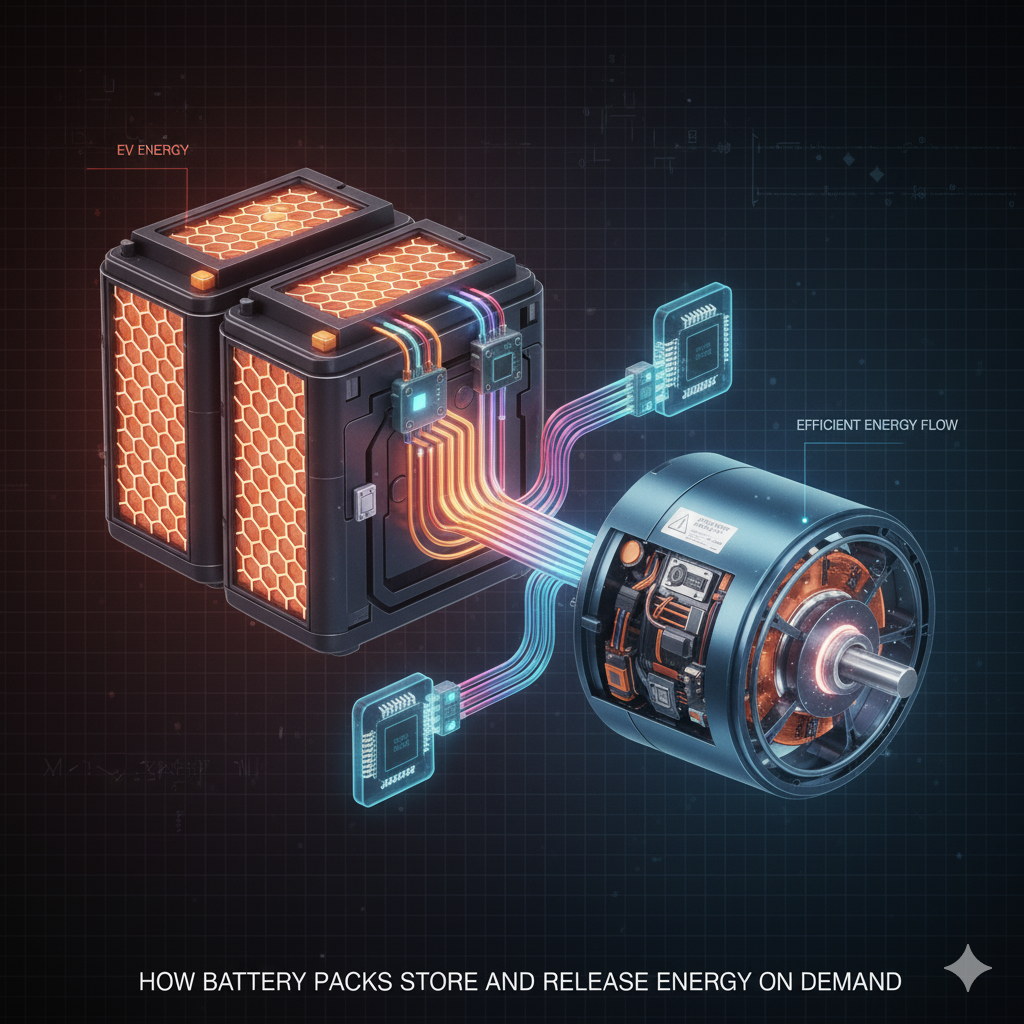
Think of the battery pack like a super-smart bucket for electricity. But unlike water that just sits there, electricity needs to be stored as chemical energy and converted back when you need it.
The battery management system acts like a protective parent, constantly checking on each cell to make sure none get too hot, too cold, or too charged up. It keeps everything balanced and safe, which is why modern EV batteries last way longer than most people expect.
A five-year-old EV battery might hold 90% of its original charge, but you probably won’t even notice the difference in your daily driving.
### Temperature, Charging, and Battery Life: The Real Story
EV batteries are like that friend who’s always adjusting the thermostat – they want everything just right. Most battery packs have their own heating and cooling systems to stay in the perfect temperature zone.
Cold morning? The car might warm up the battery before you even get in. Hot summer day? Cool liquid flows through the pack to prevent overheating. Some cars even let you “pre-condition” the battery while it’s still plugged in at home.
Modern batteries are tough. They come with 8-10 year warranties and often last much longer. Unlike old laptop batteries that suddenly die, car batteries gradually lose capacity over many years.
## The Invisible Network: Controllers and Power Electronics

### The Motor Controller: Your Car’s Electronic Brain
If the motor is the muscle, the controller is definitely the brain. This computer makes thousands of tiny decisions every second about exactly how much power to send where and when.
Your accelerator pedal basically tells the car “I want 50% power” or “Give me everything you’ve got!” The controller translates that into precise electrical signals that make the motor do exactly what you want, smoothly and efficiently.
But it’s not just about speed. The controller also handles safety stuff like reducing power if a wheel starts spinning or protecting the battery if things get too hot.
### Converting DC to AC: Why Your Car Needs an Inverter
Here’s where it gets a bit technical, but stay with me. Your battery stores DC electricity (flows one direction), but your motor needs AC electricity (switches direction back and forth).
The inverter is like a translator that converts between these two types of electricity thousands of times per second. It also makes regenerative braking work by converting the power generated when you slow down back into battery-friendly electricity.
### Managing Power Flow: How Software Controls Everything
Modern electric cars are basically smartphones with wheels. Software monitors everything – battery charge, temperature, power usage, driving conditions – and makes smart decisions about power management in real time.
Low on battery? It might limit air conditioning to extend your range. Driving efficiently? Maybe it allows more power for acceleration. Some cars even get software updates that improve performance or add new features.
## Getting Energy Back: Regenerative Braking Explained

### Turning Kinetic Energy Back into Electricity
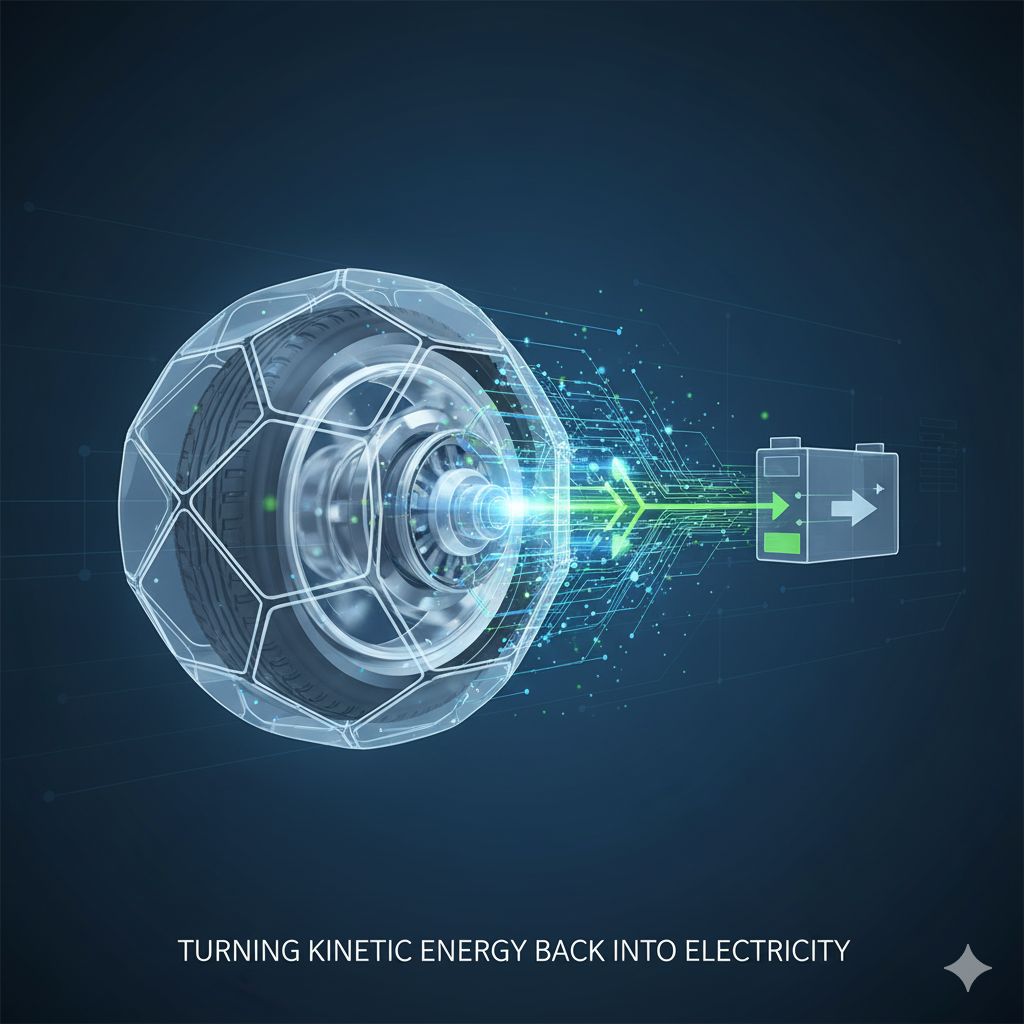
This might be the coolest feature most people don’t understand. When you lift your foot off the accelerator, the motor switches jobs and becomes a power generator. Your car’s forward motion spins the motor, which creates electricity that goes back into the battery.
It’s like having a tiny wind turbine connected to your wheels. The faster you were going, the more energy you can capture when you slow down.
### How Regenerative Braking Extends Your Driving Range
In a gas car, all the energy you use to speed up gets wasted as heat when you brake. In an electric car, you can get back 15-20% of that energy. That might not sound like much, but it really adds up, especially in stop-and-go traffic.
Electric cars are actually more efficient in city driving than highway driving because all that stopping and starting becomes opportunities to put energy back in the battery.
### The Balance Between Regen and Traditional Brakes
Electric cars still have regular brake pads, but they barely use them. Regenerative braking handles most of the light stopping, while the regular brakes only kick in for hard stops or emergencies.
This means brake pads can last 100,000 miles or more. Some EV owners go years without needing any brake service.
## Charging Up: How Electric Cars Refuel
### AC vs. DC Charging: Understanding the Two Main Types
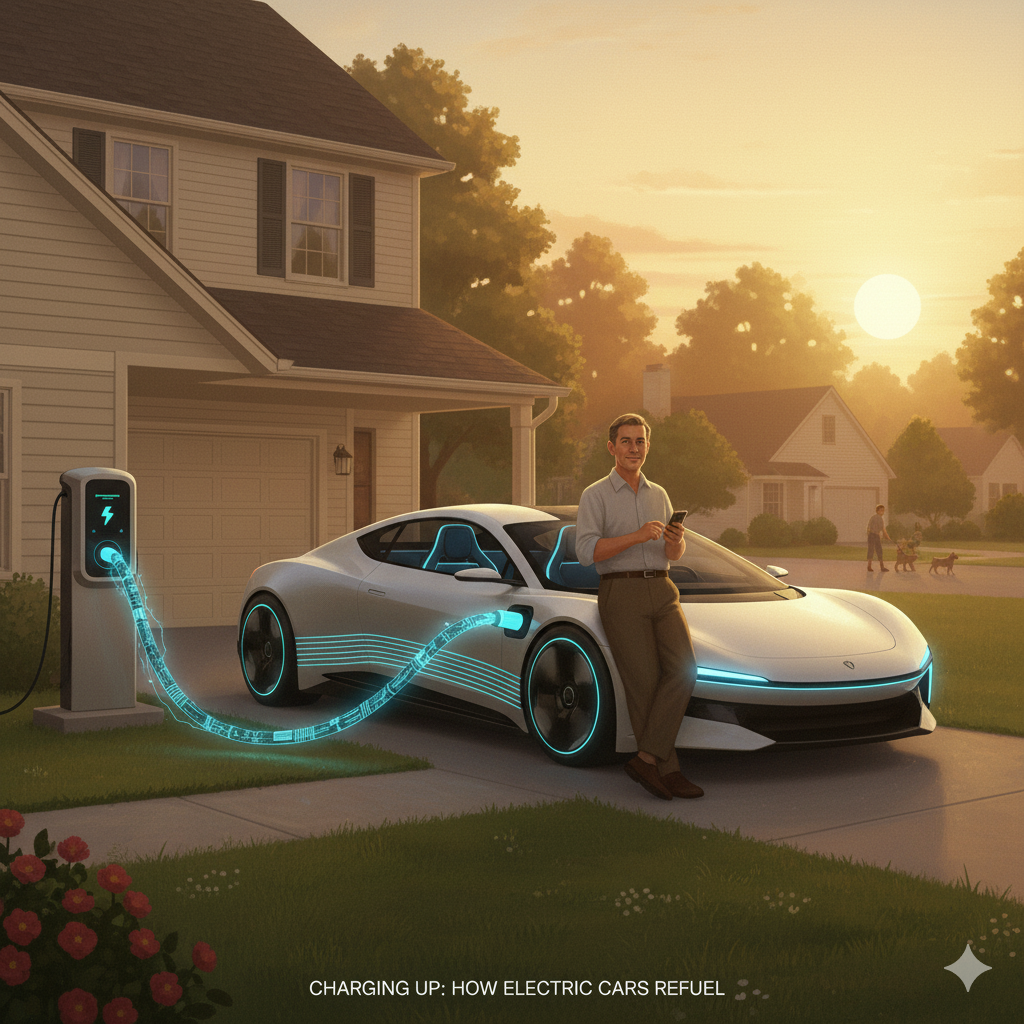
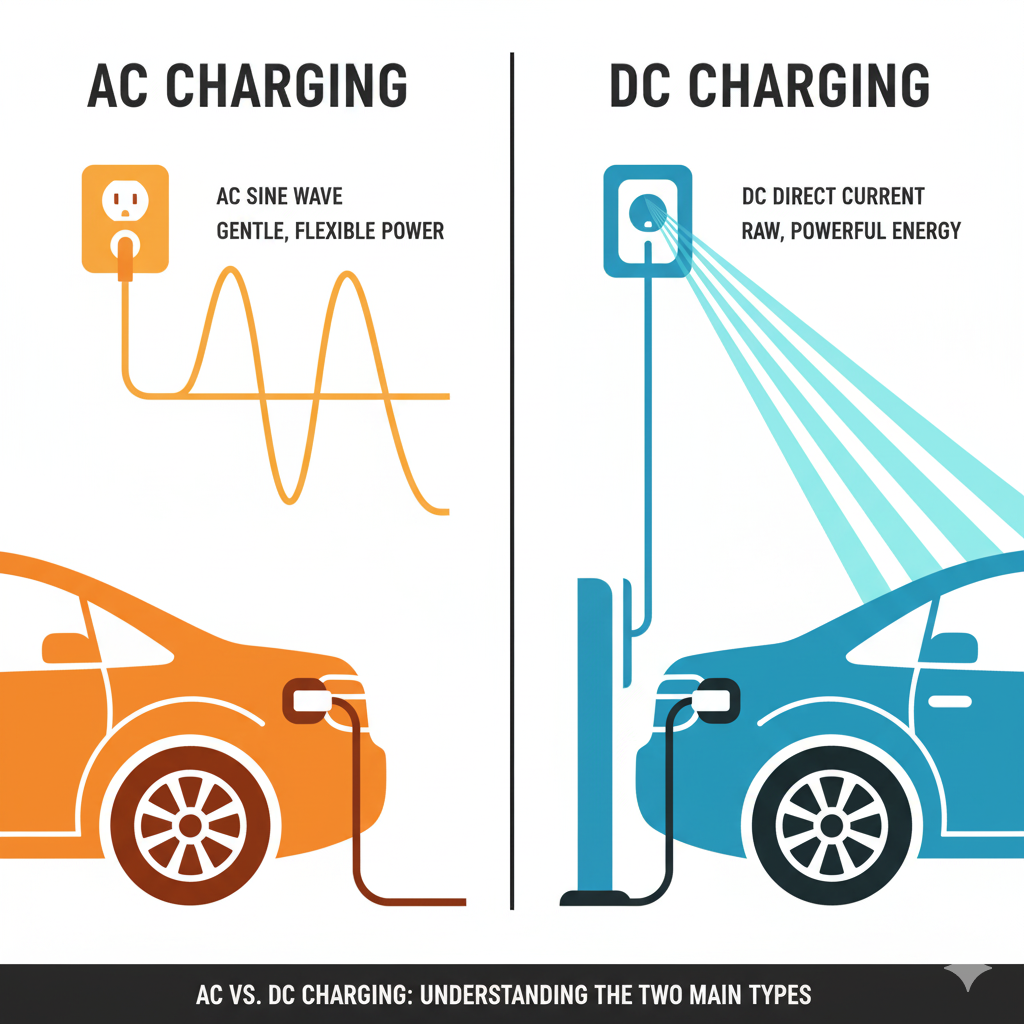
There are two main ways to charge: AC and DC. AC charging uses your car’s built-in converter to change the electricity type for your battery. DC fast charging has huge converters built into the charging station that pump power directly into your battery.
Think of AC charging like filling a water bottle from a regular faucet – it works fine but takes time. DC fast charging is like using a fire hose – much faster, but you need special equipment.
### From Wall Outlet to Fast Charger: Different Charging Speeds
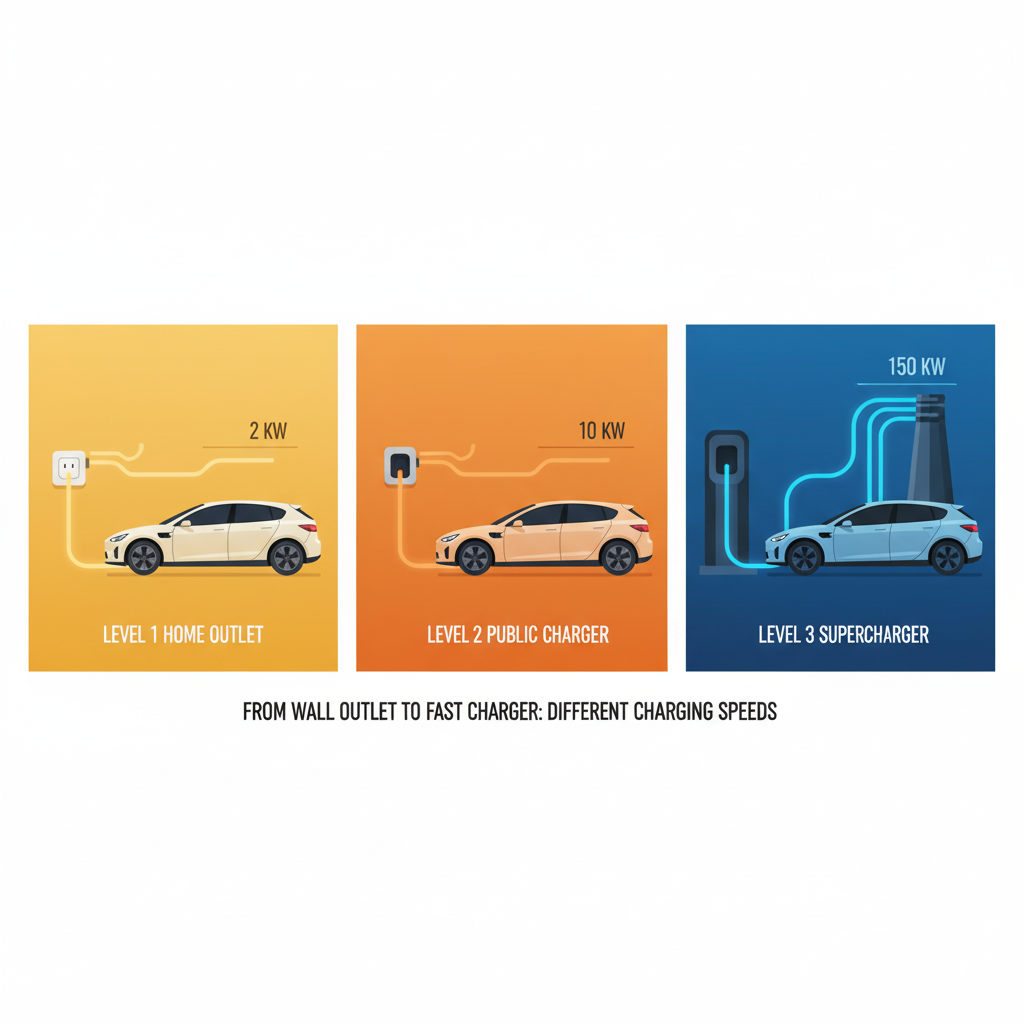
A regular wall outlet gives you about 3-5 miles of range per hour – painfully slow but better than nothing. A 240V outlet (like your dryer uses) gives 25-40 miles per hour – perfect for overnight charging at home.
DC fast chargers can add 100-300 miles in 30-60 minutes, which makes road trips possible. Here’s the catch: charging slows down as your battery fills up, like being careful not to overflow a glass of water.
### What Happens Inside Your Car During Charging
When you plug in, your car and the charger have a quick conversation about what kind of power is available and what safety checks are needed. Your car constantly monitors battery temperature and makes sure everything stays safe.
Many cars can be programmed to charge during off-peak hours when electricity is cheaper, or even sell power back to the grid during expensive peak times.
## Summary
Electric vehicles work through a surprisingly simple process that’s more efficient than gas engines. An electric motor converts electricity from a battery pack into rotational motion, controlled by sophisticated electronics that manage power delivery. The battery stores energy that can be replenished through charging and even recovered through regenerative braking. While the technology might seem complex, the basic principles are straightforward: electricity powers a motor, electronics control the flow, and batteries store the energy needed to keep moving.
## Frequently Asked Questions
**Q: Do electric cars really have fewer moving parts than gas cars?**
A: Yes, electric motors have about 20 moving parts compared to over 2,000 in a typical gas engine. This means less maintenance and fewer things that can break.
**Q: How long do electric car batteries actually last?**
A: Most EV batteries are designed to last 8-15 years or 100,000-200,000 miles, with many lasting much longer. They gradually lose capacity rather than suddenly failing.
**Q: Can I charge an electric car with a regular wall outlet?**
A: Yes, but it’s very slow. A standard 120V outlet might take 20+ hours for a full charge, while a 240V outlet (like for a dryer) takes 4-8 hours.
**Q: What happens if an electric car runs out of battery while driving?**
A: The car will gradually lose power and eventually stop, similar to running out of gas. However, most EVs give you plenty of warning and help you find nearby charging stations.
**Q: Are electric cars more dangerous in accidents because of the high voltage?**
A: No, EVs are designed with multiple safety systems that automatically disconnect the high-voltage system in a crash. They’re actually often safer than gas cars in accidents.
***
**Keywords:** electric vehicle technology, electric car motor, EV battery pack, lithium-ion battery, regenerative braking, electric car charging, AC DC charging, motor controller, electric vehicle efficiency, EV maintenance, electric car range, battery management system, electric motor vs gas engine, EV power electronics, electric vehicle safety, electric car performance, EV charging speed, electric vehicle components, electric car how it works, electric vehicle future
